


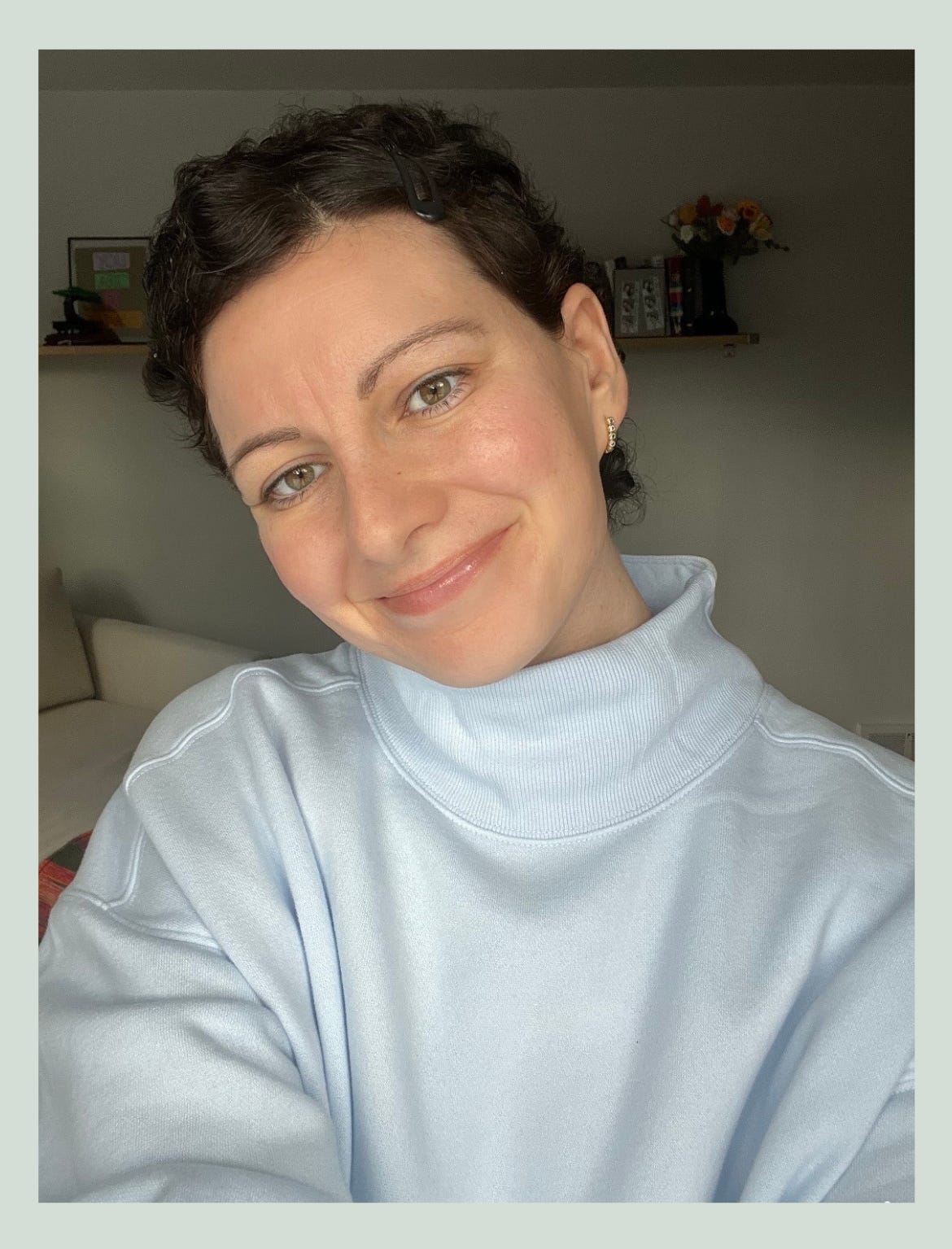
Today, I’m speaking with Hannah Brown, whose newsletter Inner Monologue explores what it was like being diagnosed with endometrial cancer at 32 while trying to start a family.
Hannah and I chatted about scanxiety, what it's like being diagnosed so young, how cancer impacts marriage, and her #1 tip for getting through chemo.
Below you’ll find highlights from our interview, or you can watch the full interview by clicking the play button above.

Alison: How are you doing today?
Hannah: I’m good, honestly. I’m doing a lot better. Last week I was having the come-downs of scan anxiety, I’m sure you understand. It’s like a roller coaster. You’re so anxious leading up to it, then you get the scan, then the results. For me, I’m so lucky to have good results, and then you just crash. You have that emotional crash of, woof, that was a roller coaster. You’re really tired at the end.
But every day away from that scan, I’m doing better and better.
How often are you doing scans these days?
Every three months for the first year. Then every six months for five years, I think. And then once a year after that. So the further I get out, the less I’ll have to be scanned.
Three months feels like a lot, but after being in treatment for so long, doing something every single day, three months actually feels like a decent break.
Do you feel like it gets easier as time goes on?
I’ve talked to people on Substack and they say the further you get out, the better it feels. But I wonder if that’s true for everyone.
I’m starting to learn that this is just… a lifelong thing. One thing I didn’t know about cancer is that the anxiety doesn’t just disappear when treatment ends. It’s not like, “Okay, you’re cured, move on.” It’s a relationship you have to manage forever.
During treatment, someone said to me, “It’s like living with a chronic illness.” That really hit me.
Yeah. And maybe that’s why this last scan was such a hard come-down. My husband even said, “It seems like this one is hitting you harder.”
Maybe it’s clicking with me that this roller coaster is going to be part of my life long-term. And physically, too—my body is never going to be the same. I had a hysterectomy. I’m in menopause. I’m learning my new body every day.
As sad as it is to say, thinking of it as chronic makes sense.
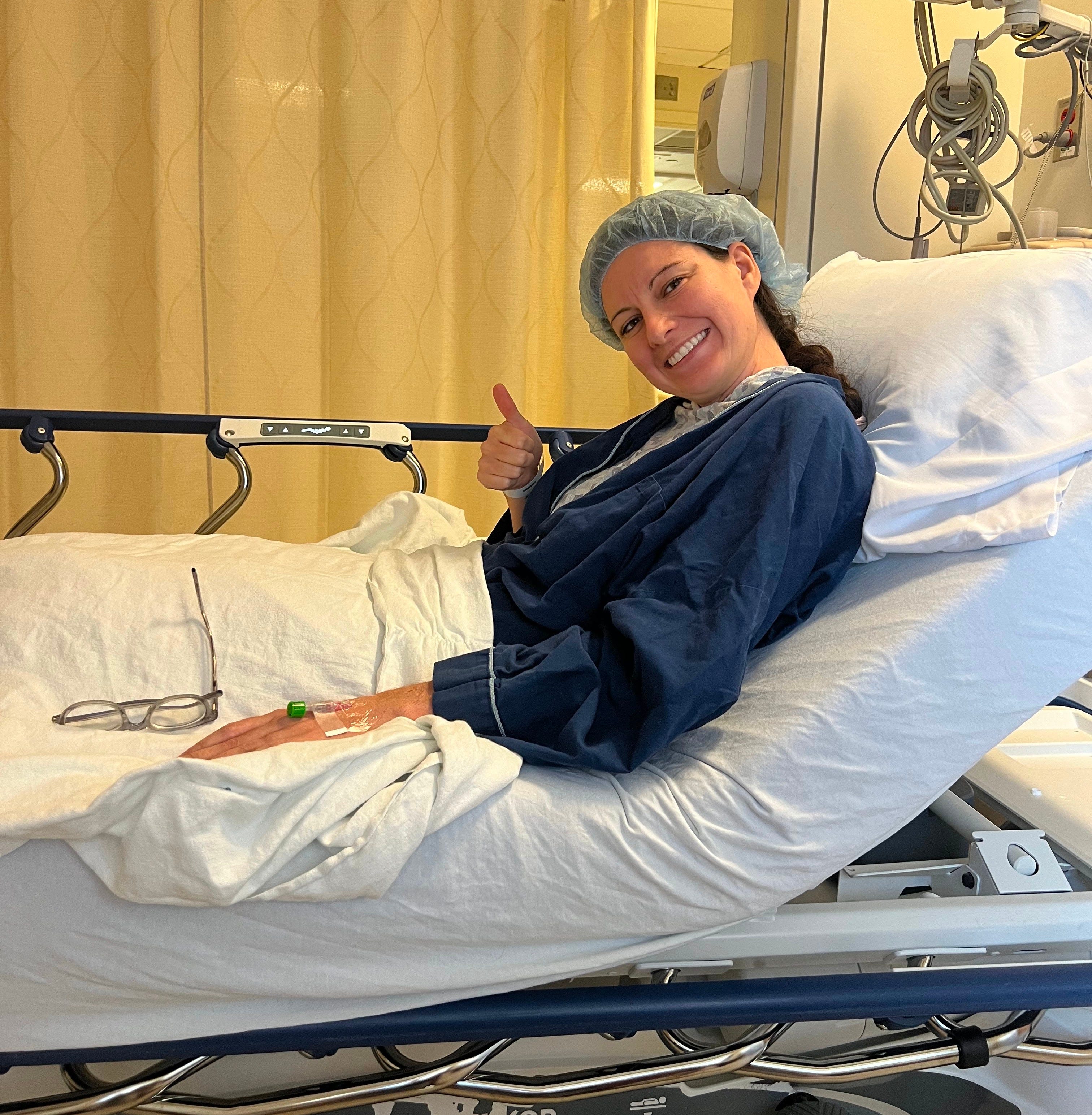
Let’s go back to the beginning. What type of cancer did you have, and how old were you?
Hannah: I had endometrial cancer, specifically uterine cancer. I was 32.
We had just bought a house. We wanted to start a family and had just moved closer to family for that. I’d had miscarriages kind of in a row over two years, so I went to a fertility clinic just to see what was going on.
They did blood work and an ultrasound. The doctor said, “It looks like you have half a uterus—the shape looks abnormal.” They weren’t alarmed. They thought maybe I’d just be high-risk in pregnancy. But she ordered an MRI for clearer imaging.
That’s when I got the call: “This isn’t what we thought. It looks like you have two masses on both ovaries.”
It was a nightmare.
I went to Memorial Sloan Kettering (MSK) in New York. They did a biopsy. On the MRI they give a probability score for malignancy, and mine was high. But because of my age, the doctor said there was still a possibility it wasn’t cancer, maybe endometriomas [cysts] from endometriosis. So there was this small glimmer of hope.
The flash-freeze sample during surgery came back malignant.
At first, they thought it was ovarian cancer—stage two—because it was on my ovaries. But after my full hysterectomy, when they sent everything to pathology, they found more cancer in my uterus. So they said it was uterine cancer that had spread to my ovaries, and I was upstaged to stage 3B.
It was such a roller coaster, having the type of cancer and staging changed mid-process.
You preserved eggs in between. How did that happen?
Initially, my oncologist told me there was no way to preserve fertility. He wasn’t worried about the IVF hormones. He was worried about the egg retrieval, the needle going into the ovaries and potentially spilling cancer cells into my bloodstream.
I was devastated. This whole journey started because I wanted to start a family. My brain was so hyper-focused on losing that.
My husband asked for another call. He said, “If the issue is the egg retrieval needle, why can’t she do the IVF medication, and then at the time of the hysterectomy, when they’re removing everything anyway, take the eggs then?”
The fertility doctor literally said, “Oh. We didn’t think of that.”
They coordinated with Cornell and my oncologist. I did IVF, they timed my surgery, and during the hysterectomy they retrieved eggs.
It was the first time at MSK they’d done it that way. They recorded it. It’ll be in medical journals so other women can hopefully have that option.
I’m just so grateful. To my husband for even thinking of it. And to the doctors who were willing to try.
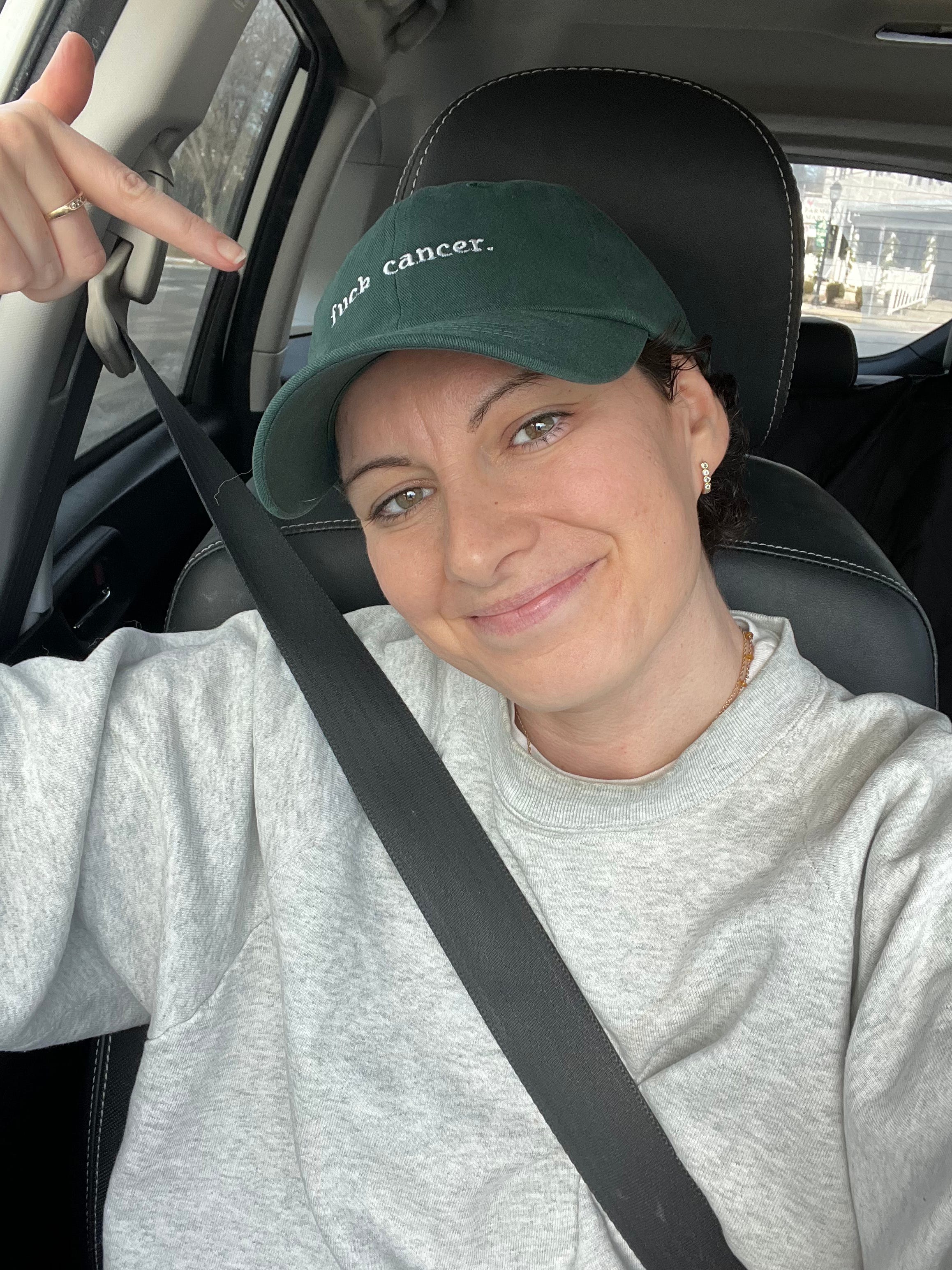
When I was diagnosed, I kept thinking—did I cause this somehow?
I think everybody goes through that blame game. You want the answer. When I was first diagnosed, I changed my whole diet. I threw out anything “toxic.” I researched everything. You just want control.
Eventually I had to let go of that. It’s not because I ate chocolate. So many different people with so many different habits get cancer. If there were one consistent cause, we’d know.
But there is a body betrayal feeling, especially being young. I was angry at my body. Like, what happened? Why didn’t you catch this?
Over time, that shifted. Watching my body go through surgeries, radiation, chemo, and still keeping me alive… and then watching my body recover itself.
How did it feel watching your peers have babies while you were going through this?
Isolation has been a huge part of this year. At first, you have support. But as treatment goes on, you start to feel the disconnect.
Most of my peers are building families right now. So not only was I going through something they didn’t understand, they were going through something I didn’t understand.
What helped was saying that out loud. “I feel disconnected.” I have friends I can say that to.
And honestly, the Substack community helped so much. And my hospital had a young cancer support group—under 45—which was huge. Oncology waiting rooms are mostly older. There’s a natural isolation when you’re diagnosed young.
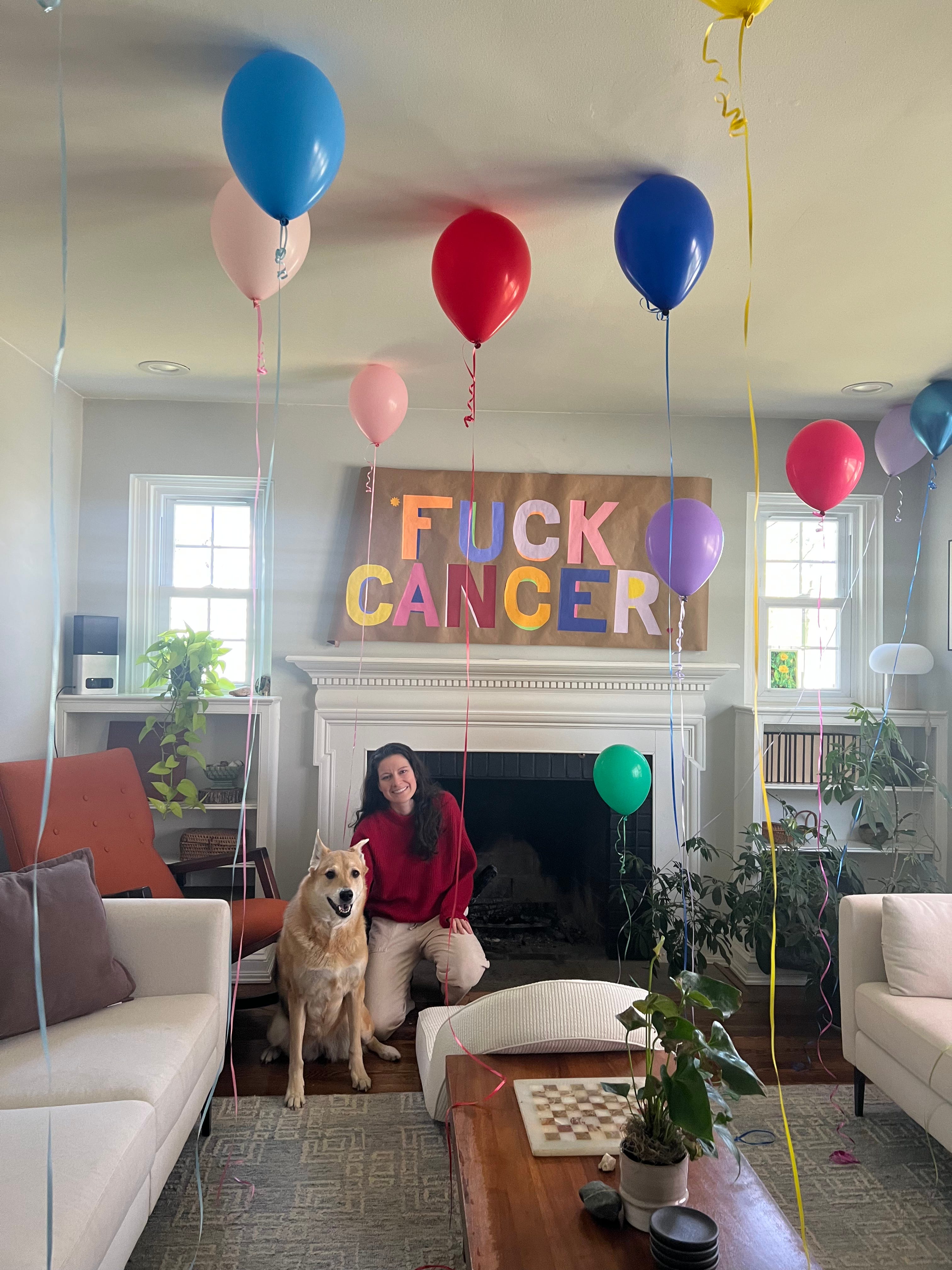
How did this change your marriage?
The biggest shift was going from romantic partners to caretaker and patient.
He went into full caretaker mode—driving me to appointments, managing medications, cooking, cleaning, running our life. And he put his own emotions on pause.
After treatment ended, he finally had space to feel. And shifting back from caretaker mode to romantic partner mode takes time. We’ve had to go back to relationship 101—date nights, intentional time together.
And our experiences were different. There were moments I was drugged up and kind of not fully present, and he was completely sober watching it happen.
For example, during my first biopsy, the doctor told him it was cancer while I was still under anesthesia. We weren’t together when we found out. I can’t imagine that experience for him.
We talk about it now. But healing from a year like that takes time.
What would you tell someone at the beginning of this?
My oncologist said, “You’re going to have to get into the arena.” At the time I was like, absolutely not. But you do. You get in it.
It’s going to be extremely hard. I won’t sugarcoat that. But you’re going to be able to do it.
And: community. Ask for help. Don’t feel like a burden. I struggled with that so much. But the people who love you want to show up.

Lightning Round
One thing that genuinely helped you get through treatment?
I’ll do practical and emotional.
From a practical standpoint: electrolytes. And Epsom salt baths. There were so many symptoms—nausea, everything—but just keeping up my water intake with electrolytes made a difference in me feeling better. And Epsom salt baths, just to relax, but also physically, your muscles, your body is going through so much.
Emotionally, voice memos from loved ones. When you’re in treatment, you can’t always see people, and sometimes you don’t even want to have a full phone call because it’s draining. But getting little voice memos, like people hyping me up or just sending sweet notes, that meant a lot.
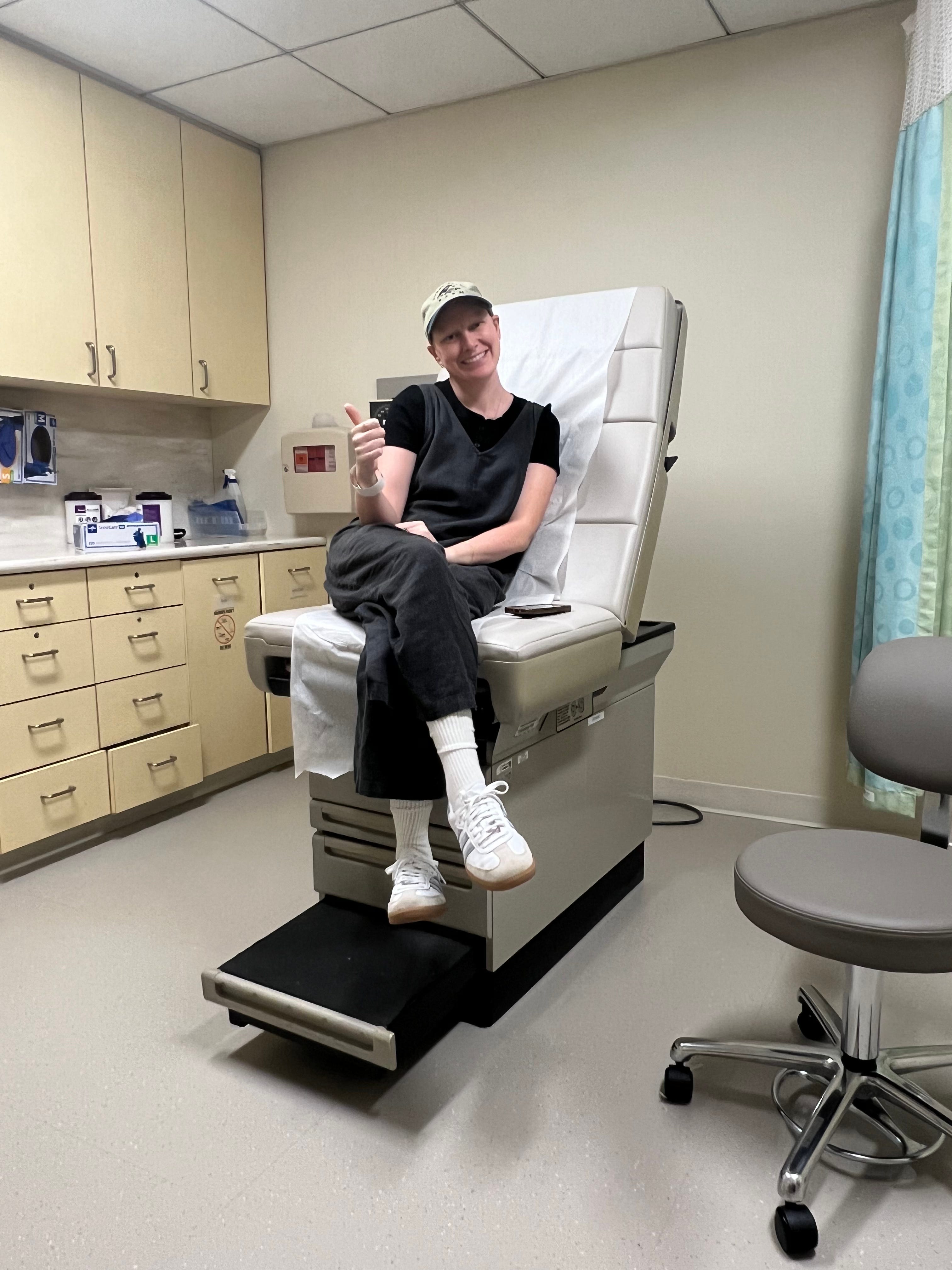
Something you brought to chemo or radiation that was actually useful?
A heated blanket. That was really the only thing I needed.
And ice packs for my hands and feet. I bought reusable ones. I’d bring them frozen, keep them in the freezer at the treatment center, and alternate them. I’d have two for each hand and two for each foot. When one got soft, my husband would switch it out.
I don’t have any neuropathy, and I really attribute that to those ice packs.
You tried cold capping too, right?
Yes. Luckily it was covered by my insurance. It didn’t work for me, but I’m glad I was able to try.
But yeah, between the cold cap and the ice packs, I was freezing. So the heated blanket was essential.
Anything people recommended that didn’t help?
Ginger chews.
I have like 20 packs of them in my cupboard. So many people put them in care packages. And maybe they help some people, but for chemo nausea, I just didn’t want a chewy candy stuck in my teeth. That was not the experience I wanted.
Peppermint essential oil helped me more, smelling it. And ginger tea felt easier than the chews.
A small comfort or routine that made a big difference?
My sister would stay at my house during treatment weeks and make my bed with fresh sheets and clean the house. Coming home after treatment to clean sheets and a calm house made such a difference.
And getting myself into the sun, even if it was just for a minute. Sometimes I would literally walk outside, sit for a minute, not feel good, and go right back to bed. But just getting my face in the sun once a day helped.
Hannah, thank you so much. I’m really grateful we got to talk.
Me too. This has been so, so nice. I’m so grateful to meet people who understand.
I feel the same.

Thank you so much for reading! xoxo


